Hamlet
Photos by Kevin Gray, Brian Shafer
July - August 2025 — Glimmer Globe Theatre
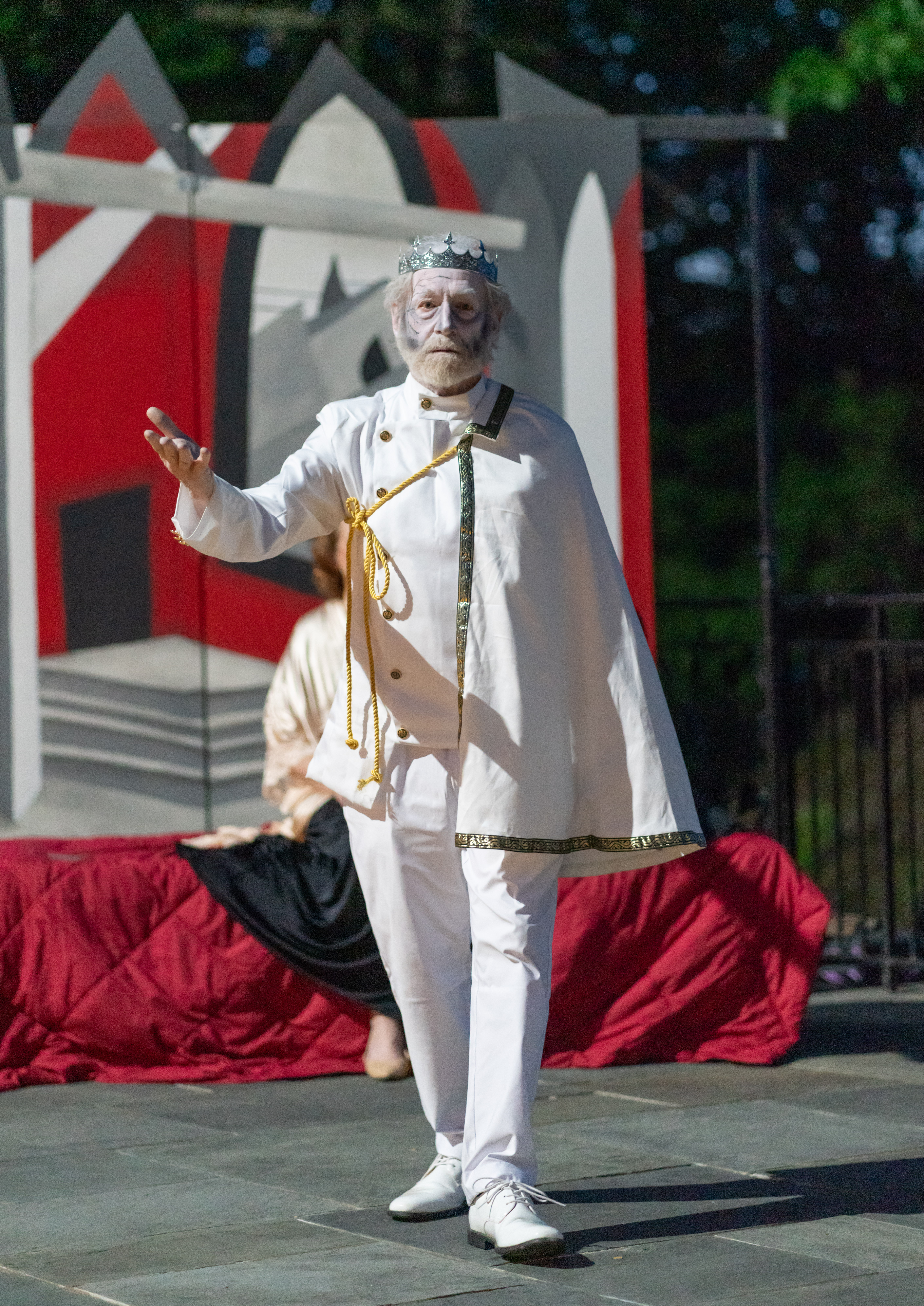
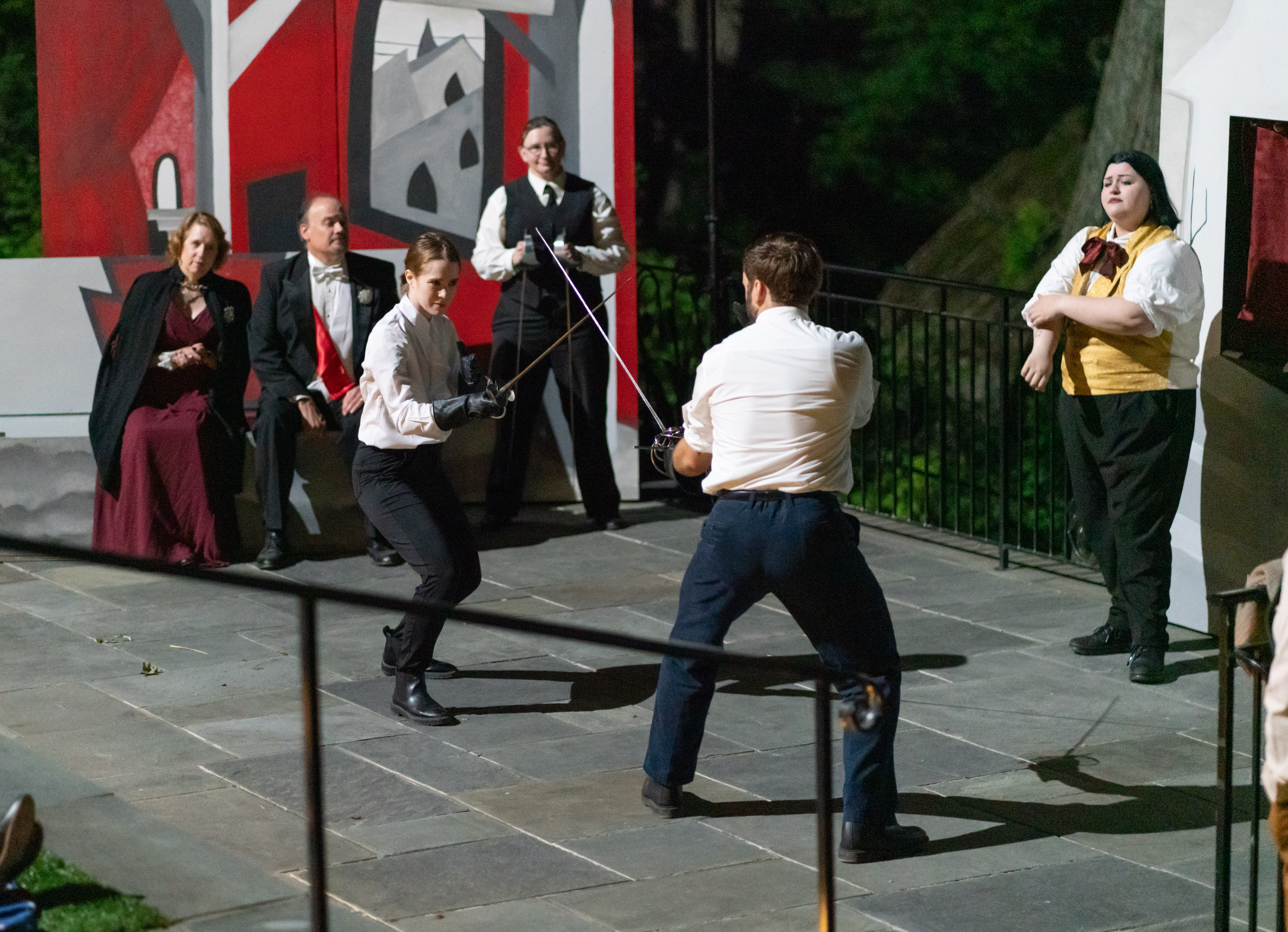
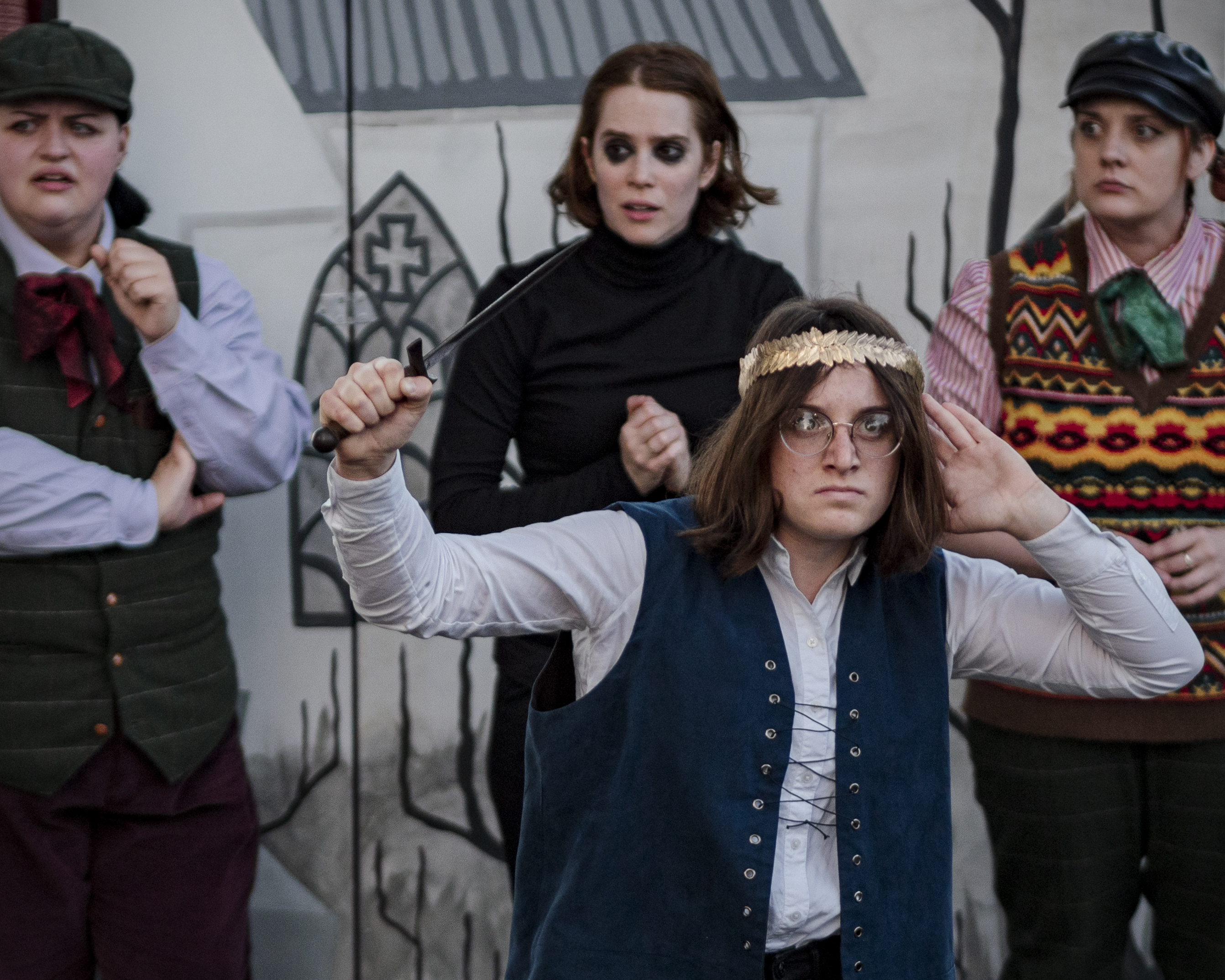
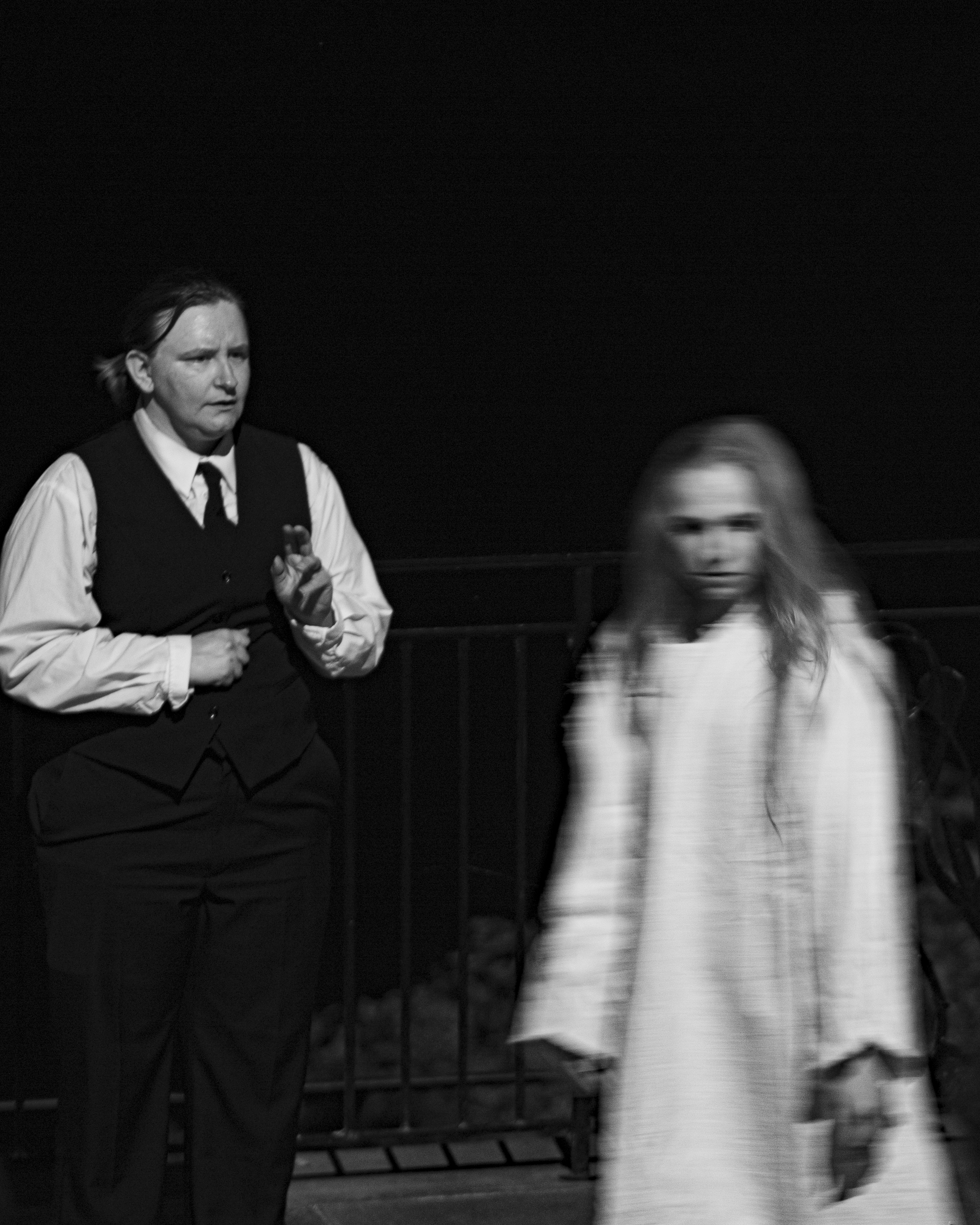
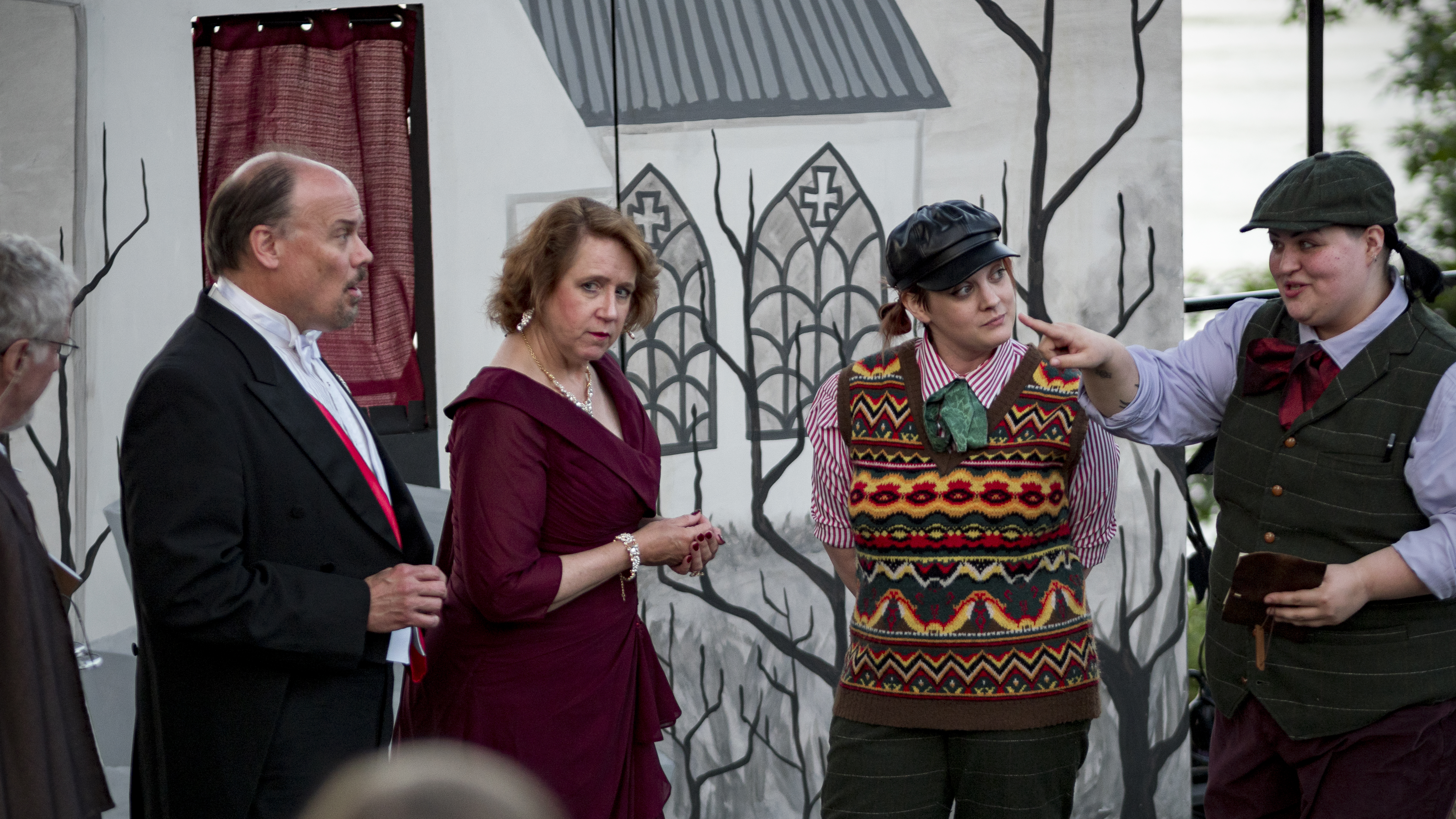
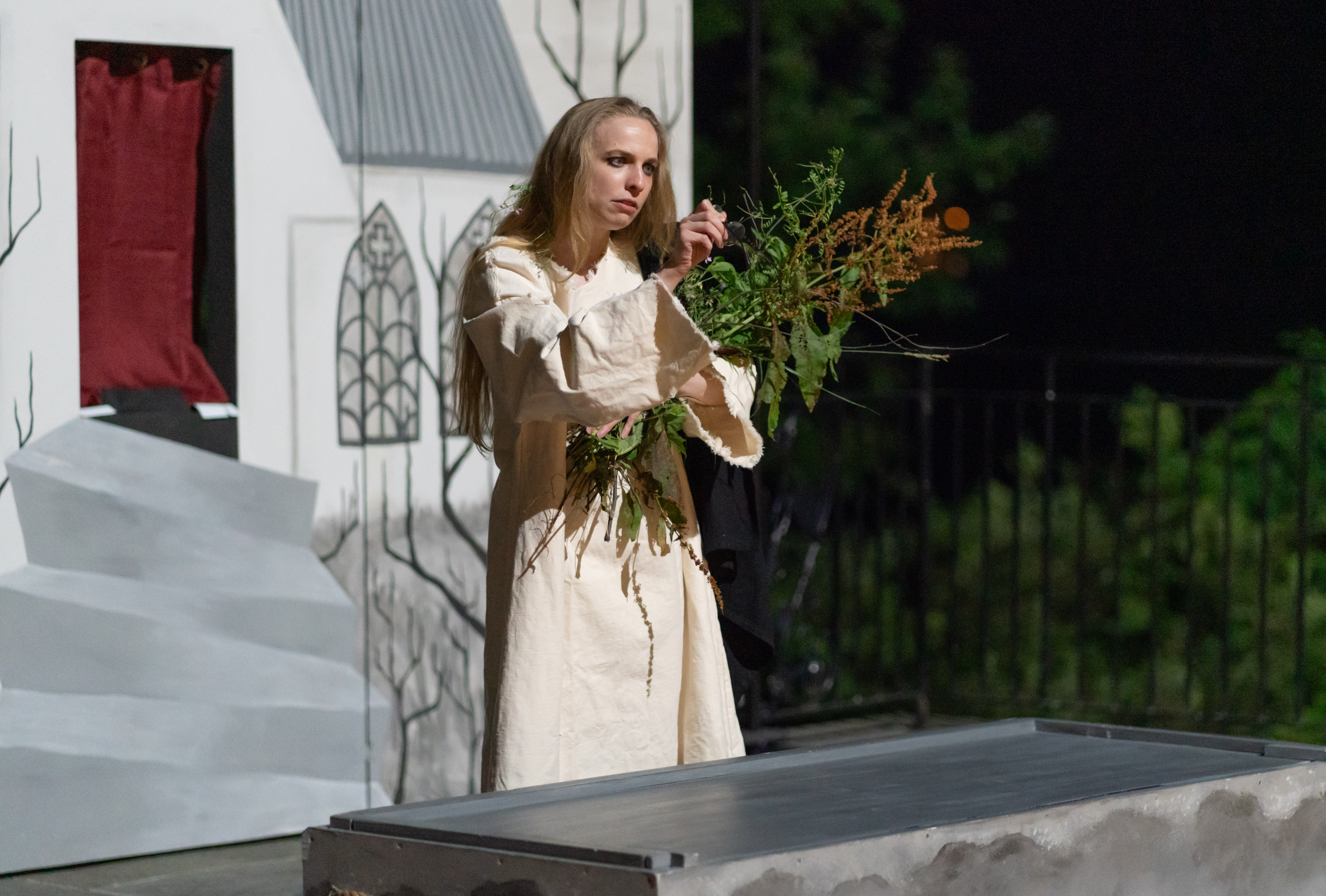
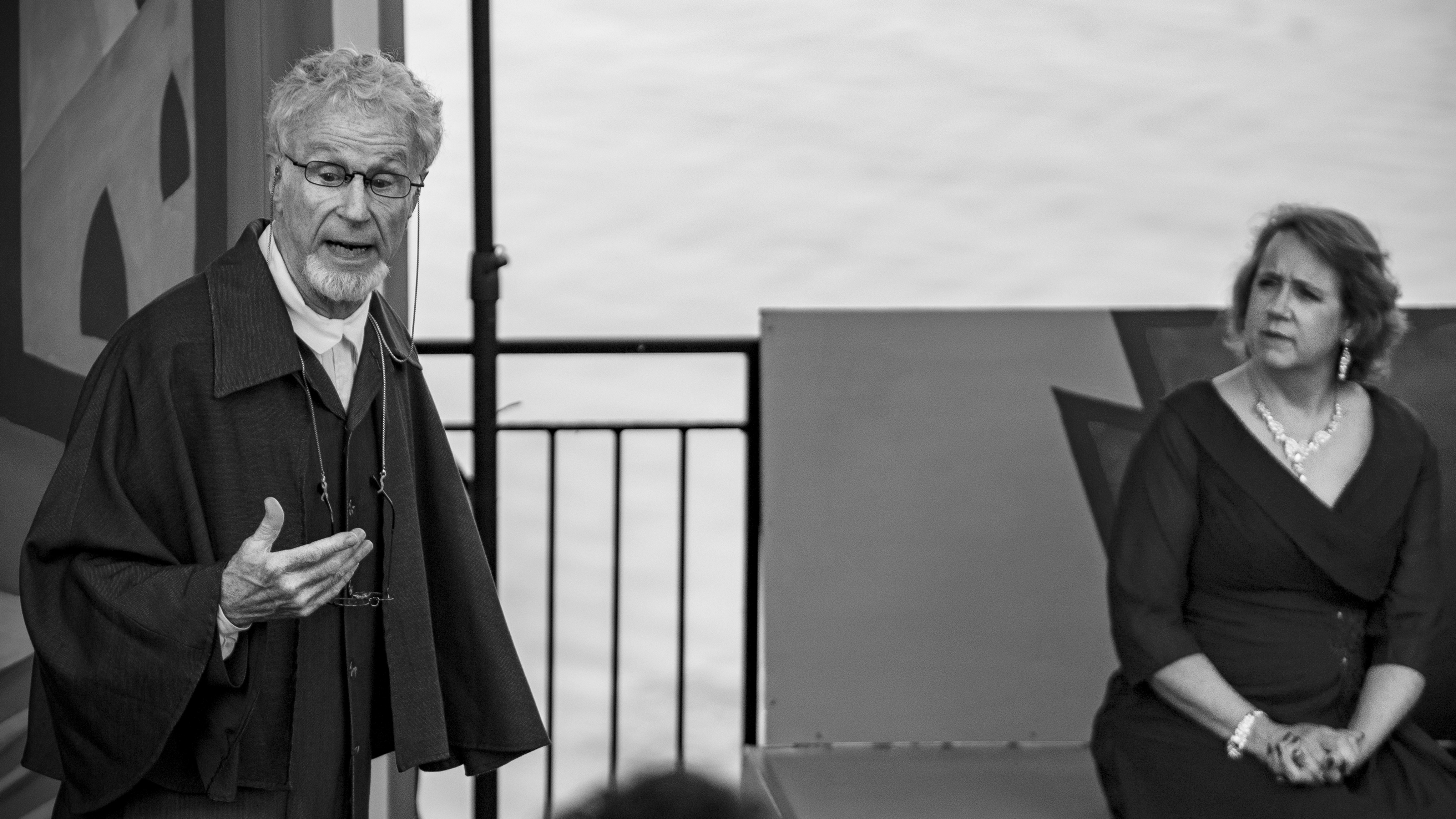
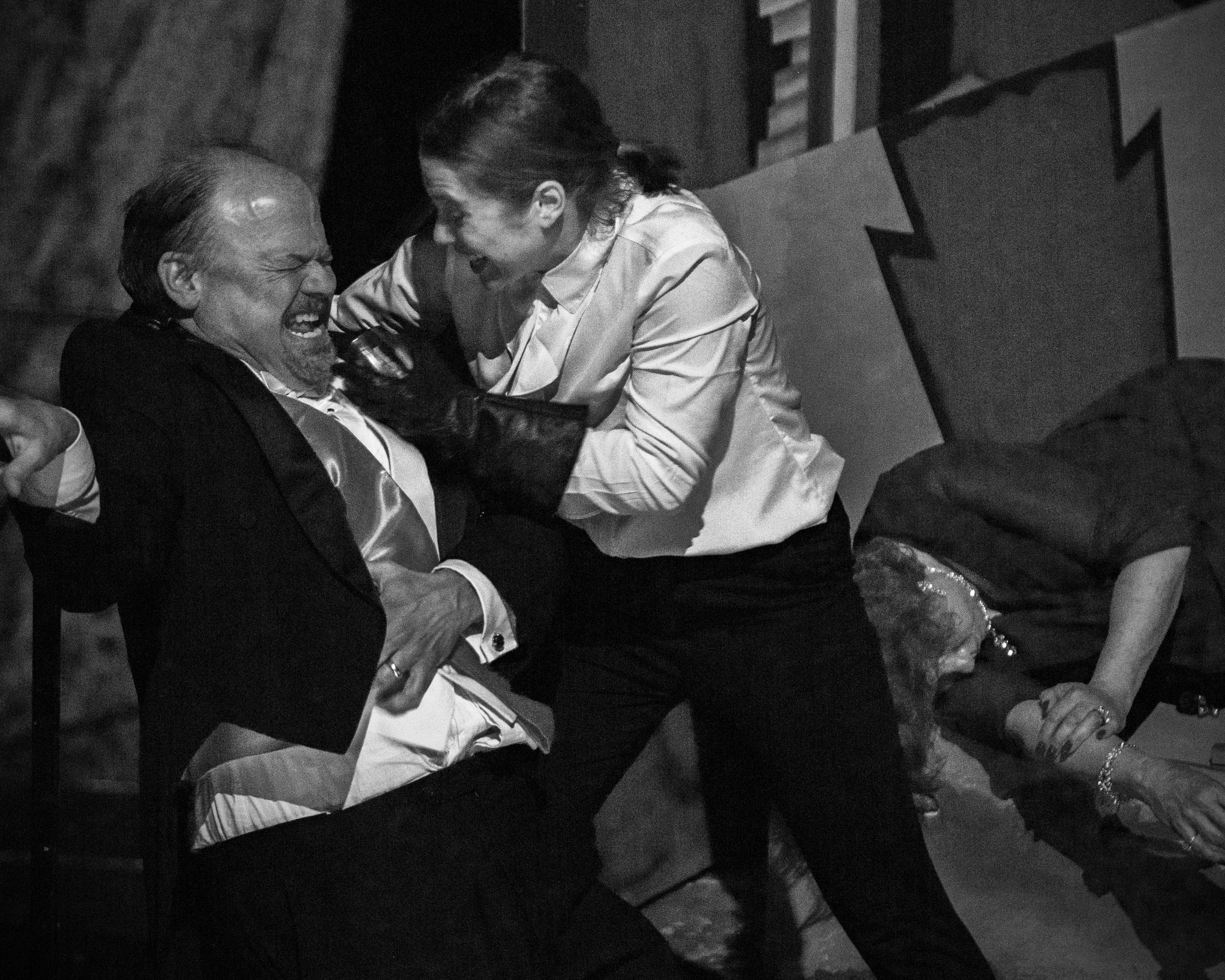
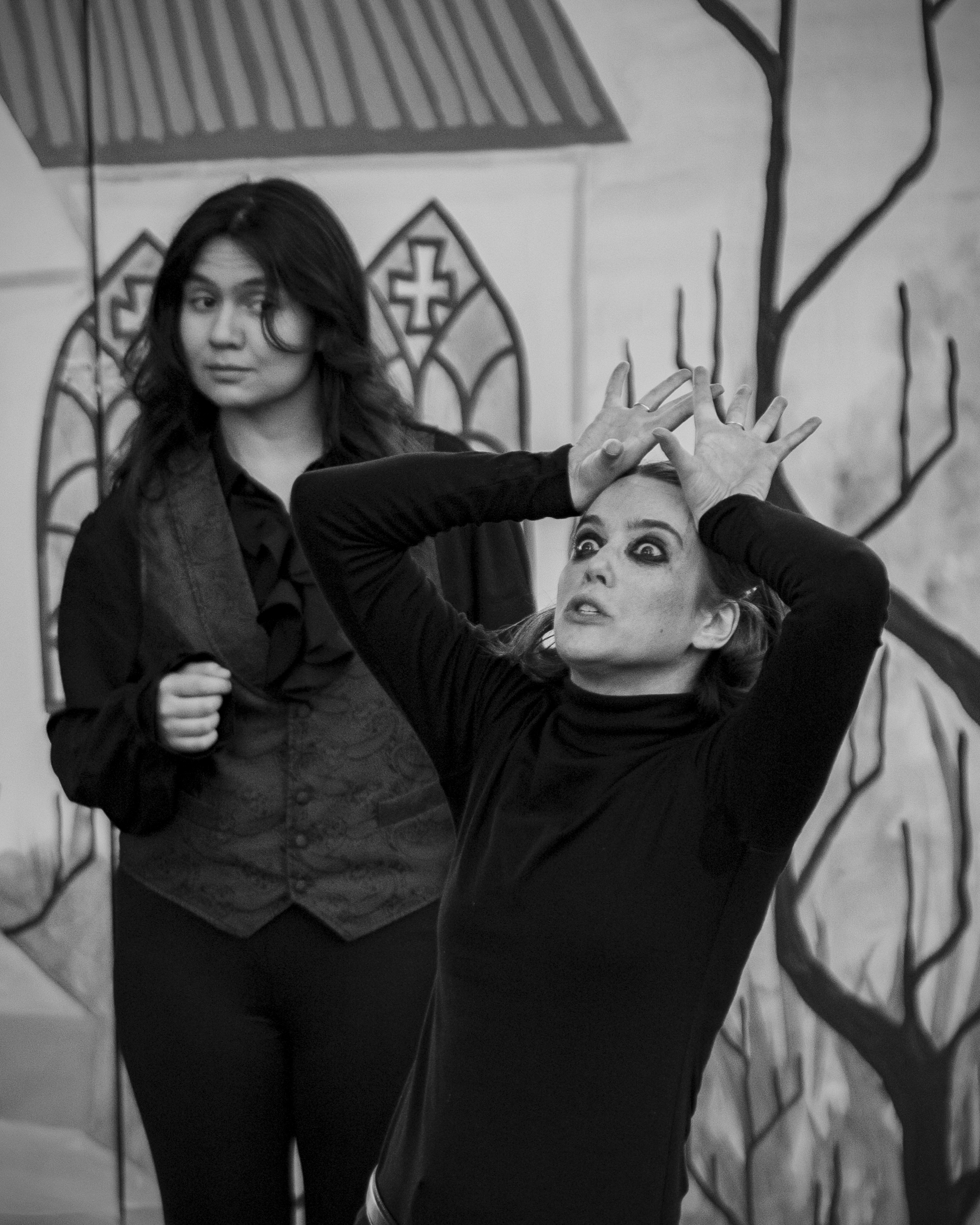
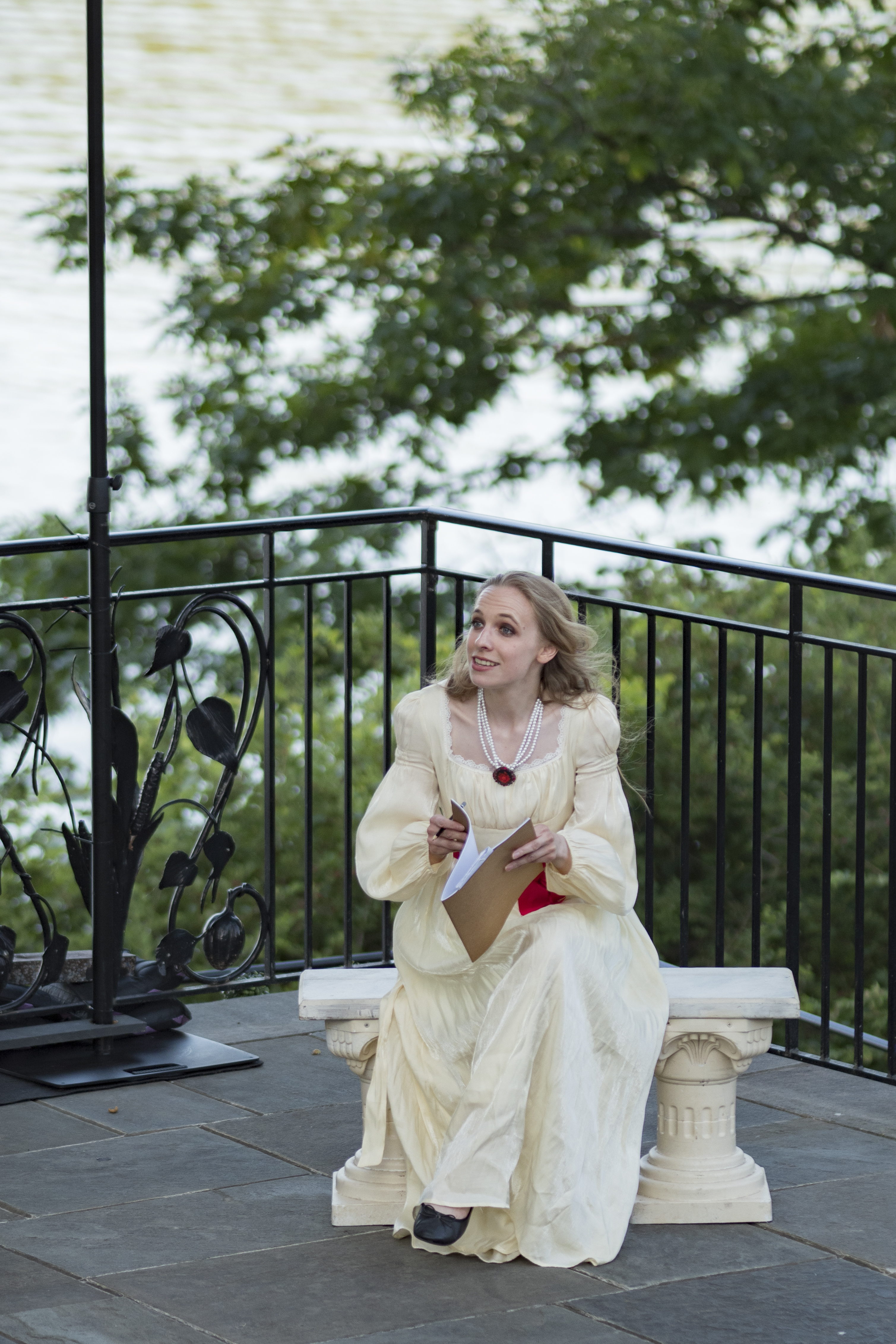
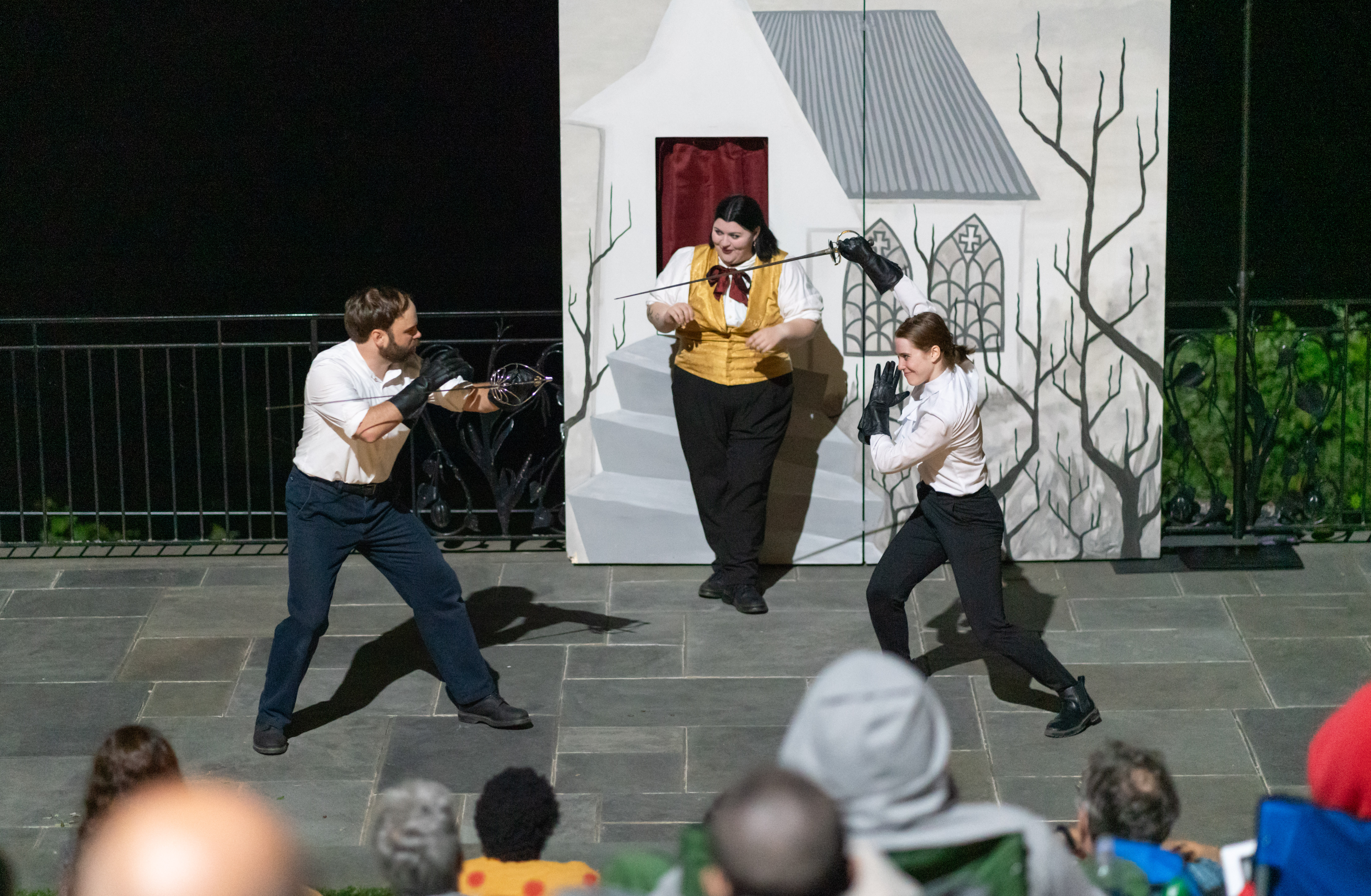
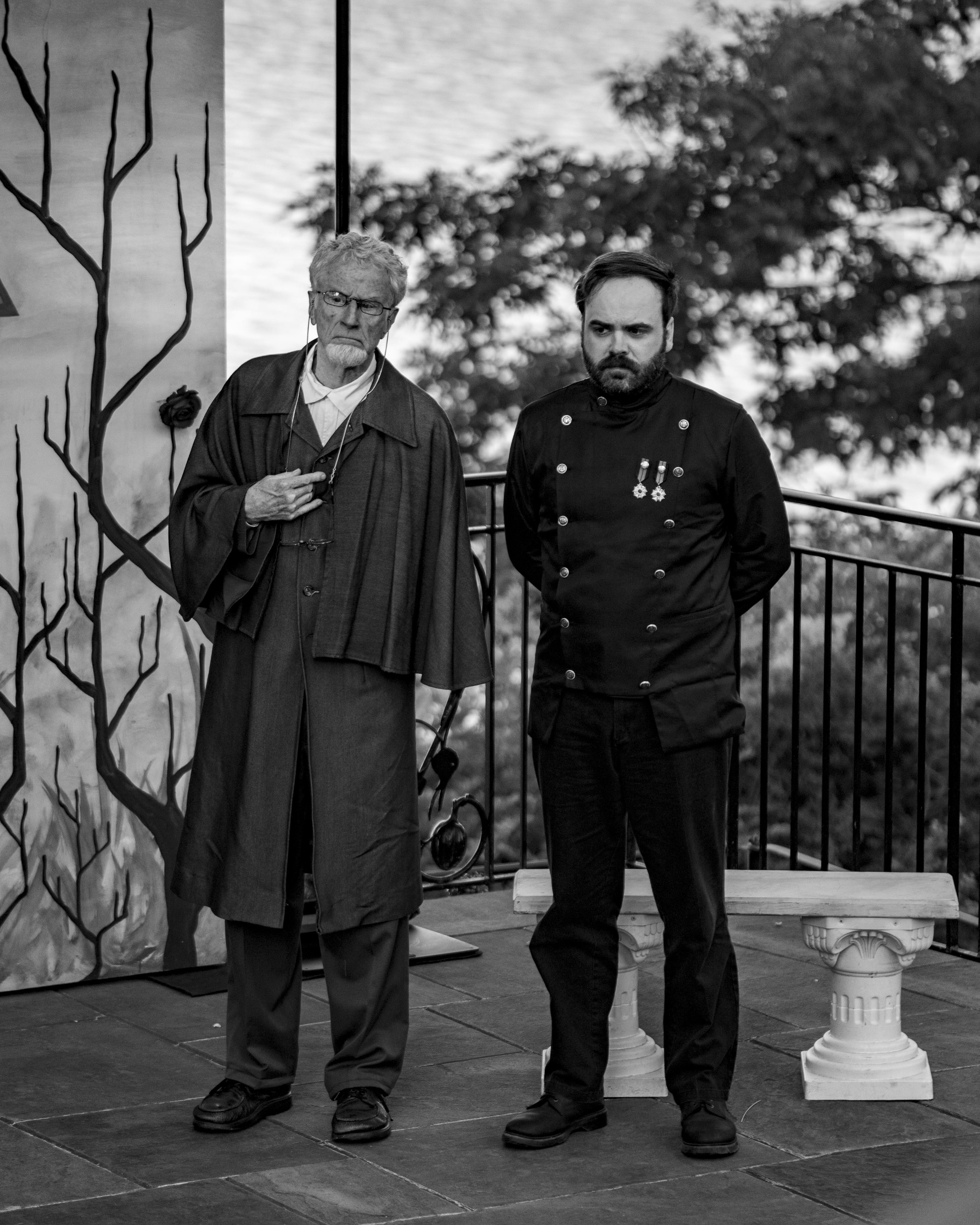
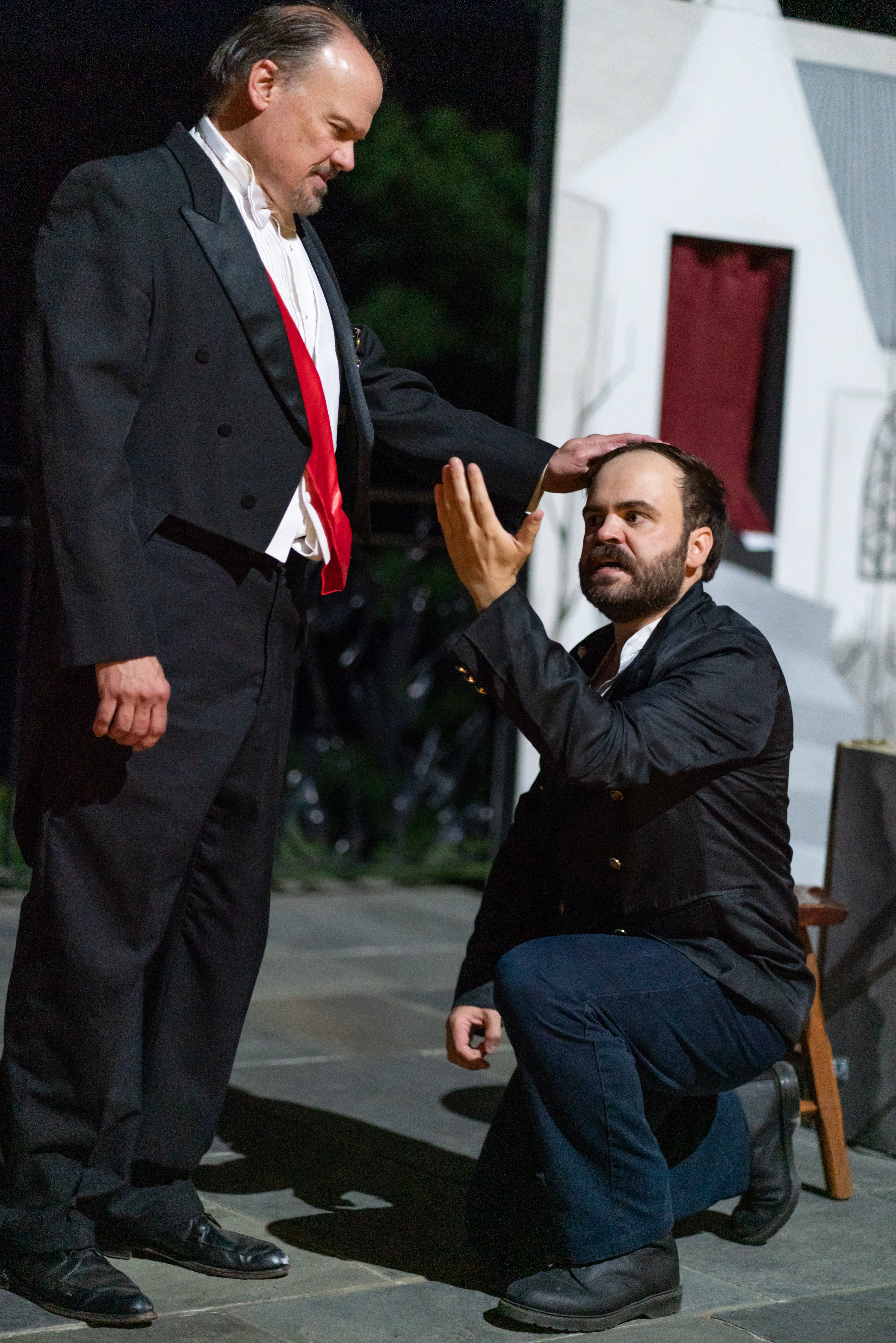
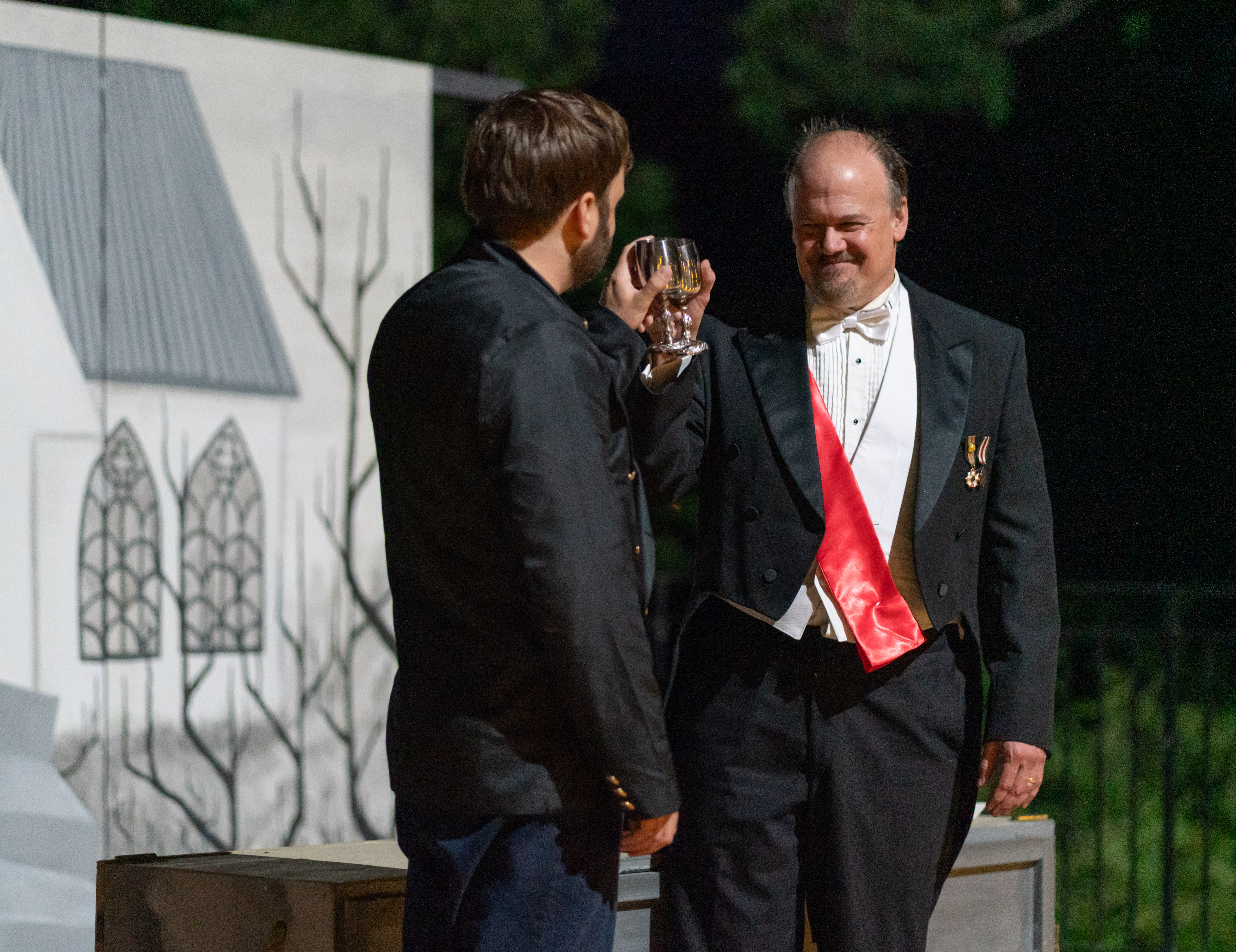
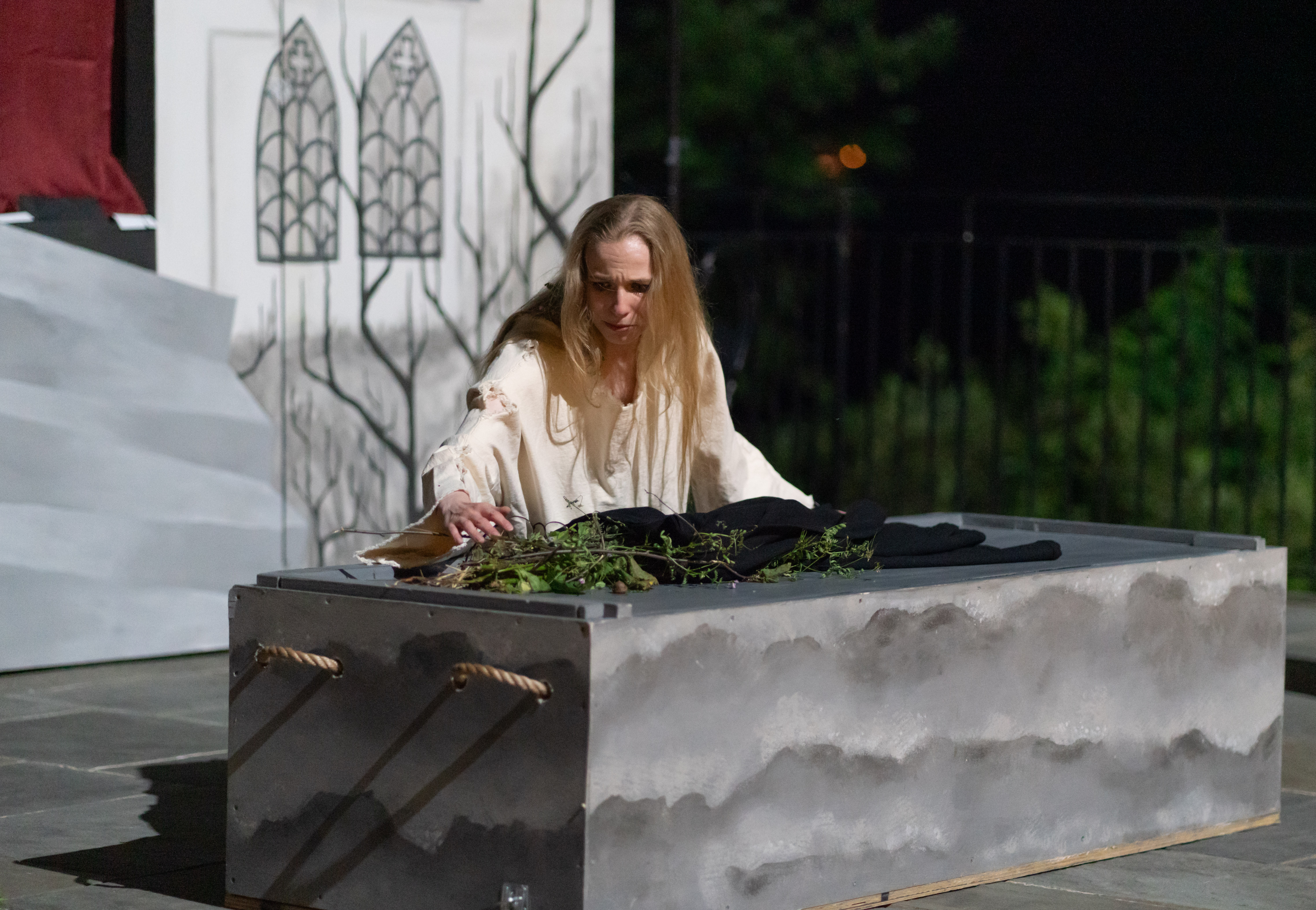
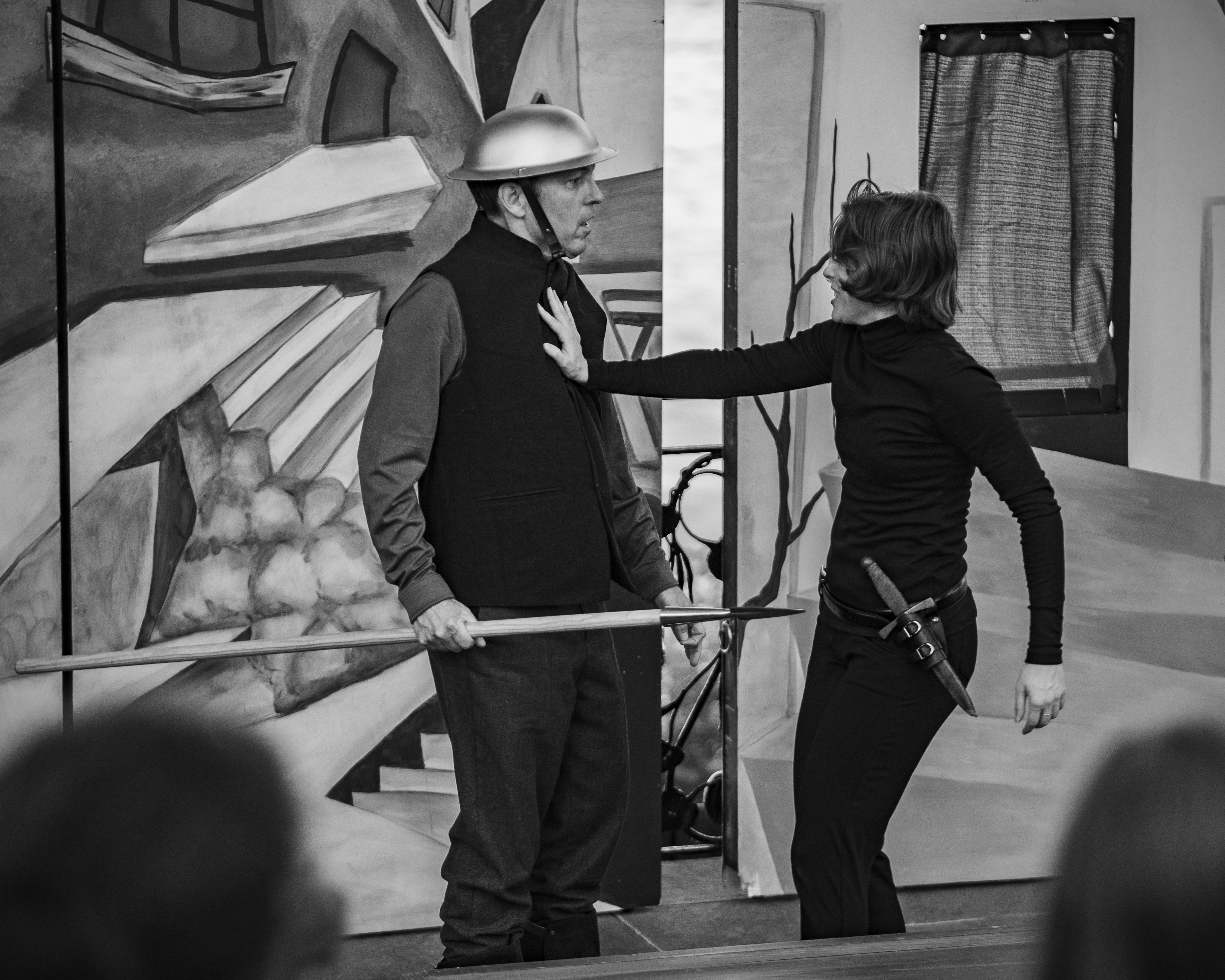
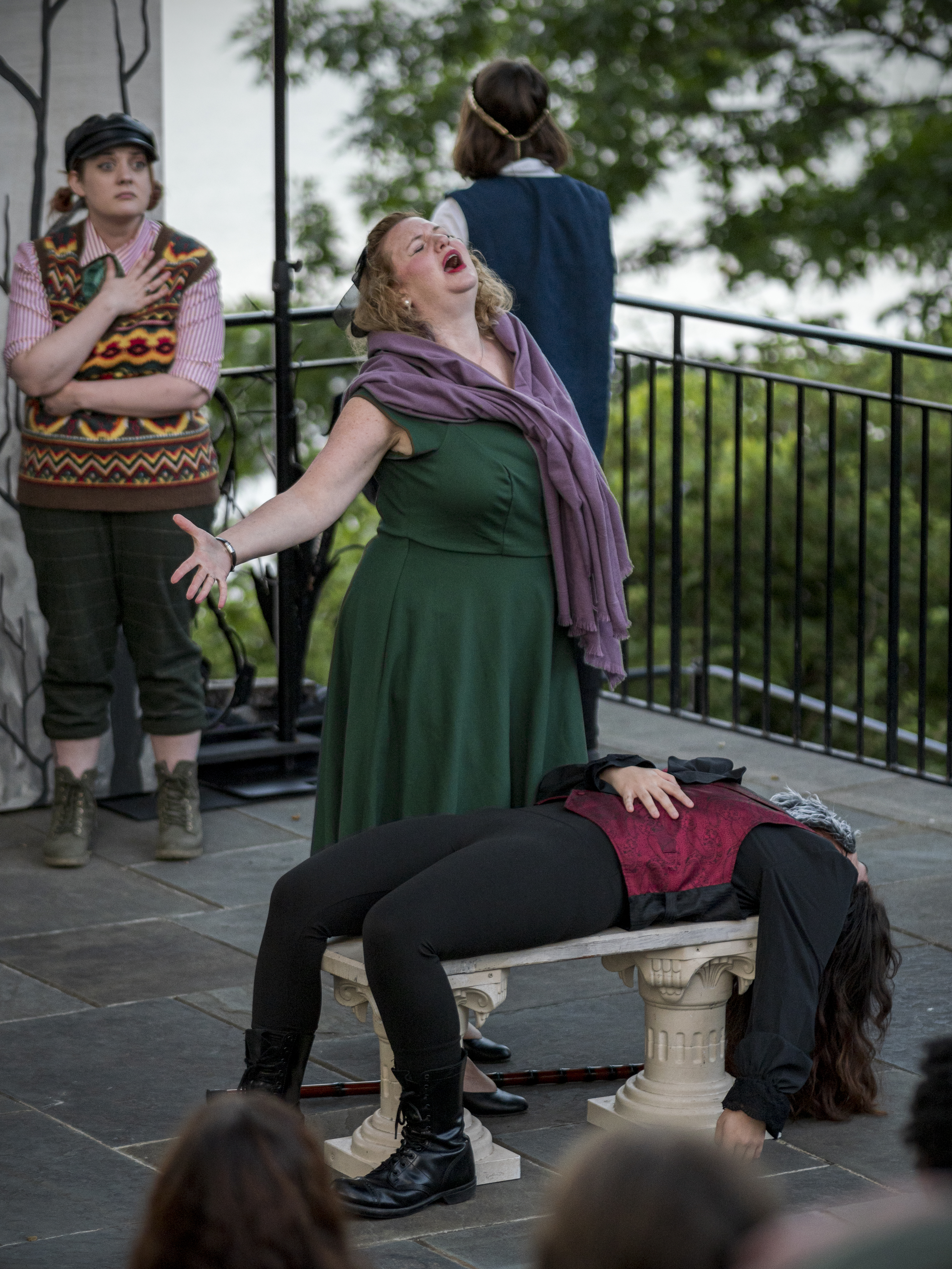
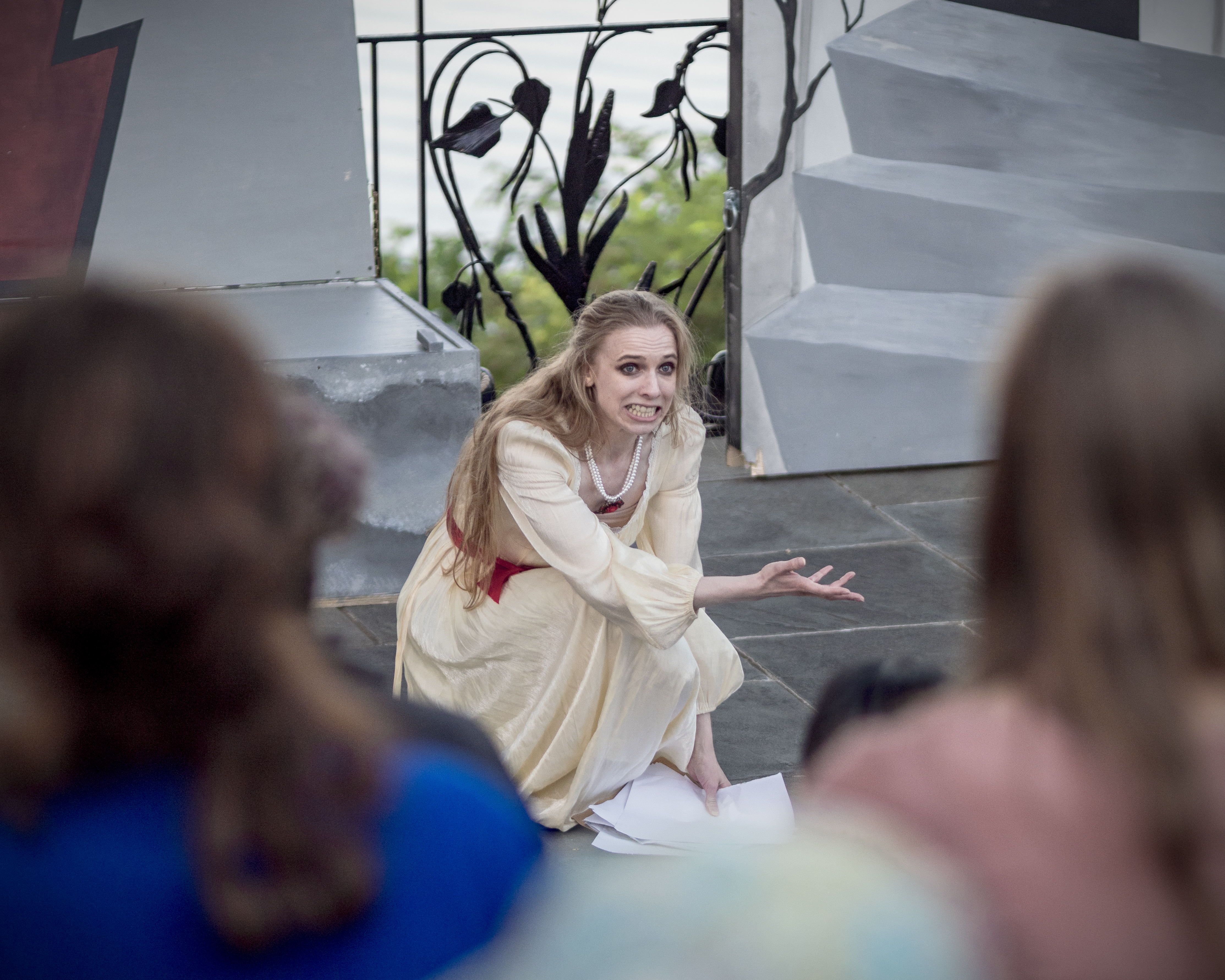
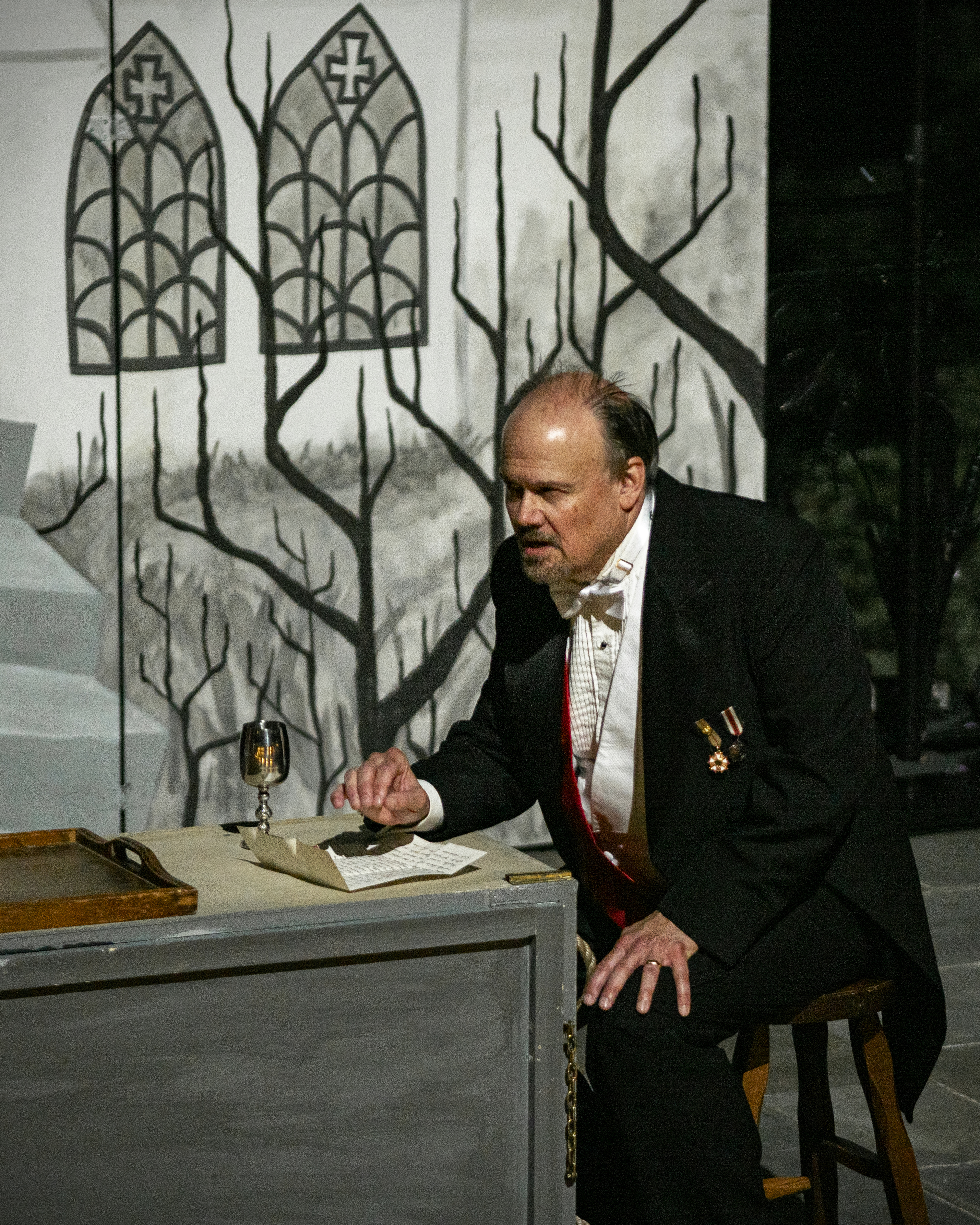
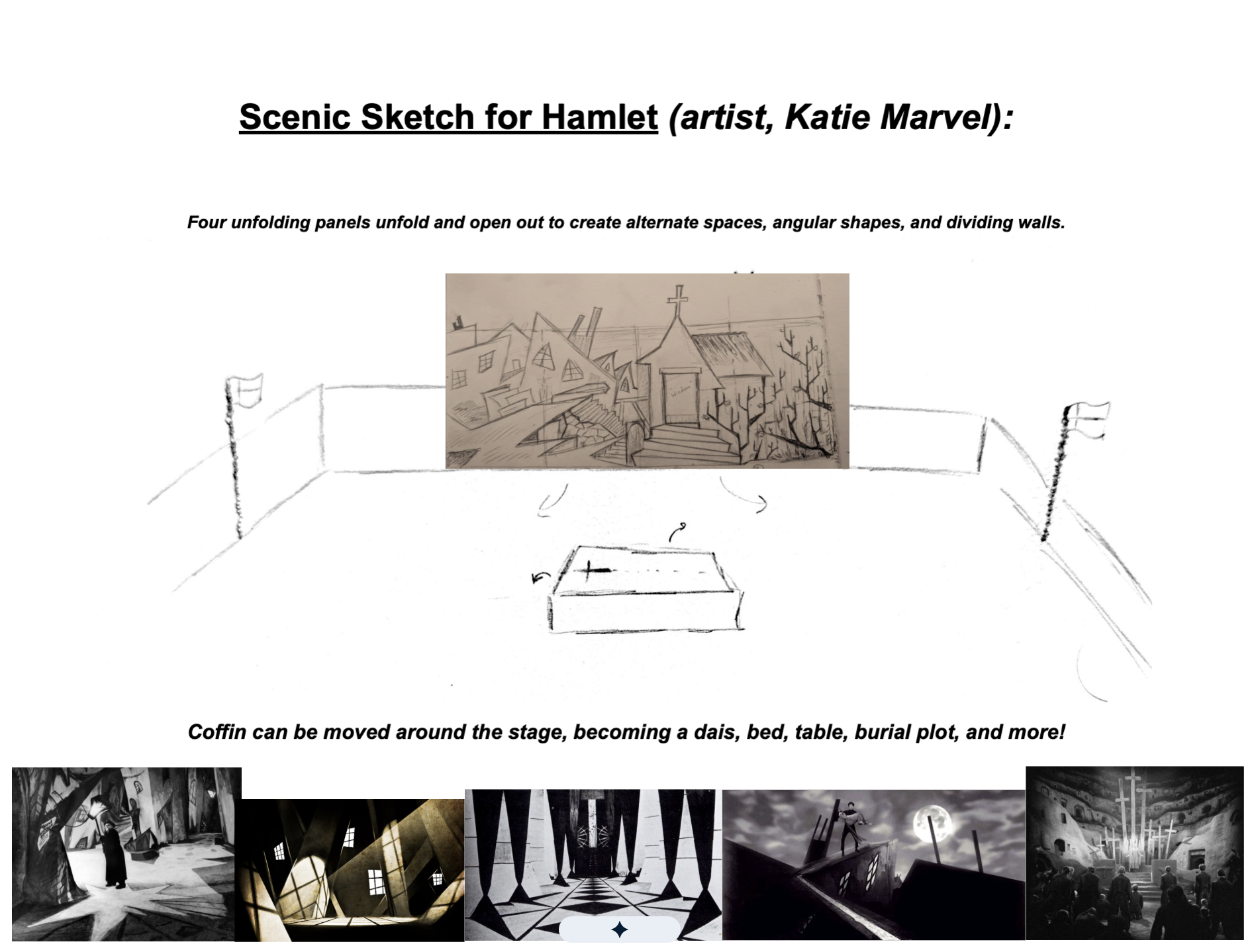
Director's Note (2025): Hamlet is a whole universe. It’s at once a monumental revenge tragedy and a moral revolution. It’s a religious, political, and ultimately literal battleground. It’s a carnival-like mirror maze, where characters, scenes, lines, and situations are consistently doubled and inverted, twisting back on themselves and defying easy categorization. One thing that is stedfast, however, is that Hamlet is among the most overtly theatrical of Shakespeare’s works. It is absolutely obsessed with performance, artifice, and how we behave differently when we know we are being watched. Harold Bloom famously quipped that a good subtitle for this play would be “The Rehearsal.” After all, it stars a young prince, unwittingly “cast” in a drama he never auditioned for, chaffing at the role he finds himself forced to play. As a means of escape, he decides to begin rehearsing for a final scene… one that he has the power to script himself, even if he is, admittedly, having trouble with the ending. When people talk about Hamlet, it’s often as a “play about death.” While this is a more than fair assessment, it may not be quite specific enough. I see Hamlet as a play about the state of being dead. An exploration of the actual physical experience of death. Like no other play before and like few plays since, it is willing to step right up to the precipice and confront the most primal mysteries of the human experience. Even as Shakespeare stares down the barrel of the impenetrable and unknowable, he reassures us that our very ability to grapple with such questions is testament to the uniqueness of the human mind. We plan to set this production in a fantastical, impressionistic, Escher-esque vision of Denmark, heavily inspired by German expressionist genre films of the early 20th century. This cinematic movement used new forms of abstraction to make tales of the distant past thrive in a liminal space outside of time, and was famed for making the inner lives of characters vividly tangible and immediate for the first time. Similarly, Shakespeare’s great innovation with Hamlet, as I see it, was to depict the depth and complexity of human thought in motion, as it had never been seen onstage before. The stairs to nowhere in the great silent horror film, The Cabinet of Doctor Caligari, reflected a paranoid society, reeling from the pain of years of brutal, senseless war. A people who, in search of a climb to heaven, found themselves perched on the rim of a bottomless chasm. The cavernous abyssal spaces of Carl Dreyer (The Passion of Joan of Arc, Vampyr), represented a void at the center of modern life, and a ruling class in the midst of being crushed by the weight of history. The shadowed wraiths and huddled masses of Fritz Lang (Metropolis, M) depicted a looming primal fear, that those strongmen who step in to fill a societal void may not have the best interests of the people at heart. All these are themes that obsess our young prince (and likewise the common people) in Hamlet’s Denmark. By adopting this aesthetic language, we will hopefully let Hamlet’s interior world to spill out across the stage, allowing for this classic story to take on new urgency for our audiences. Hamlet was an inflection point in world literature. Everyone after, from Milton to Joyce, Austen to Melville, Woolf to Tolstoy, was dealing with the ghosts Shakespeare unleashed in this play. It by far Shakespeare’s longest work. It is his most revised, most amended, most tinkered with. It is everywhere in our culture. Overfamiliarity with it can be a blessing and a curse. It’s possible no one has ever fully understood the complexity of what’s at work here, maybe not even Shakespeare himself. So let’s step in with a questioning eye, with an open mind, and find our way through the dark together.