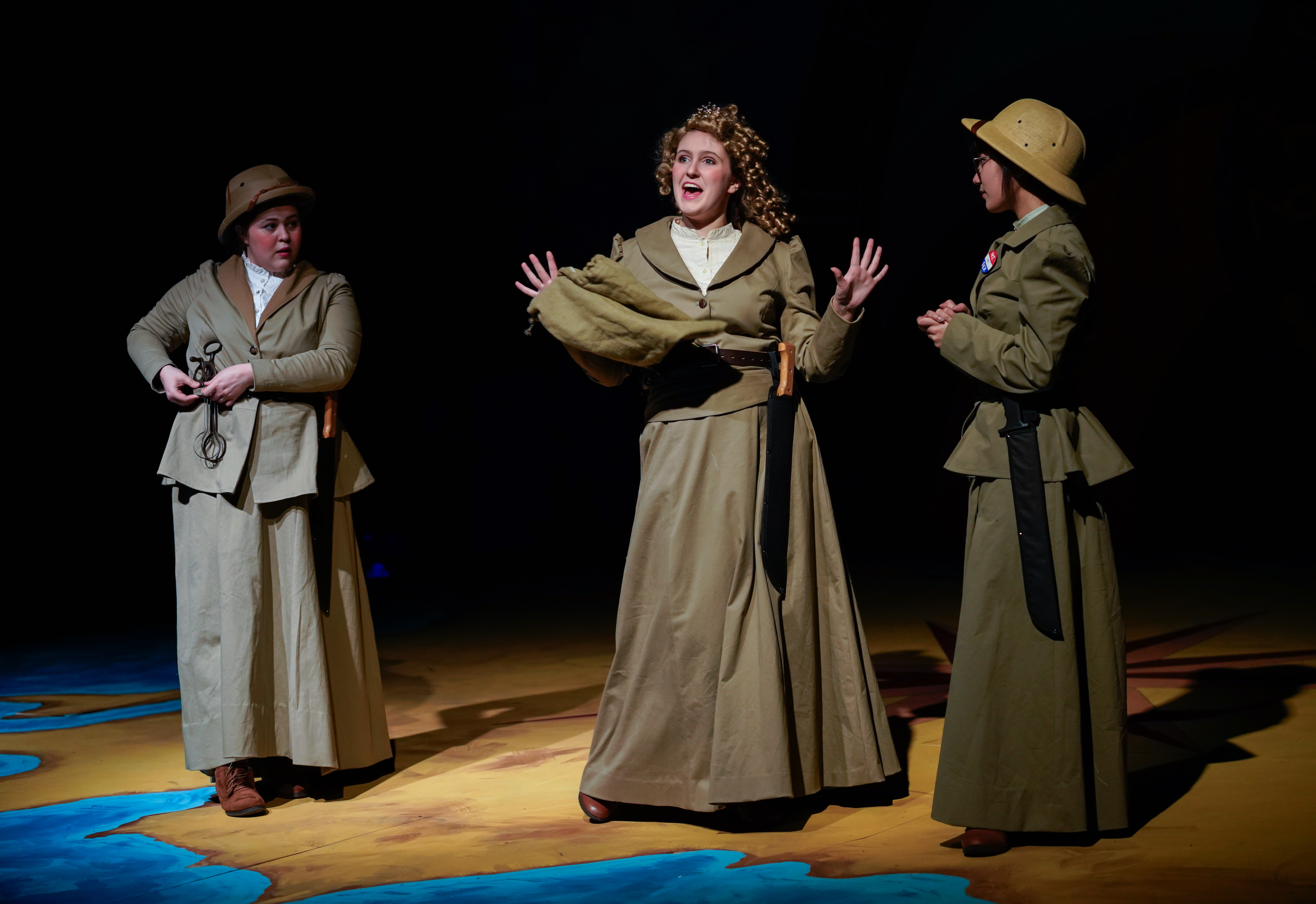
On the Verge
Photos by Kevin Gray
April 2024 — Hartwick College Theatre Dept.
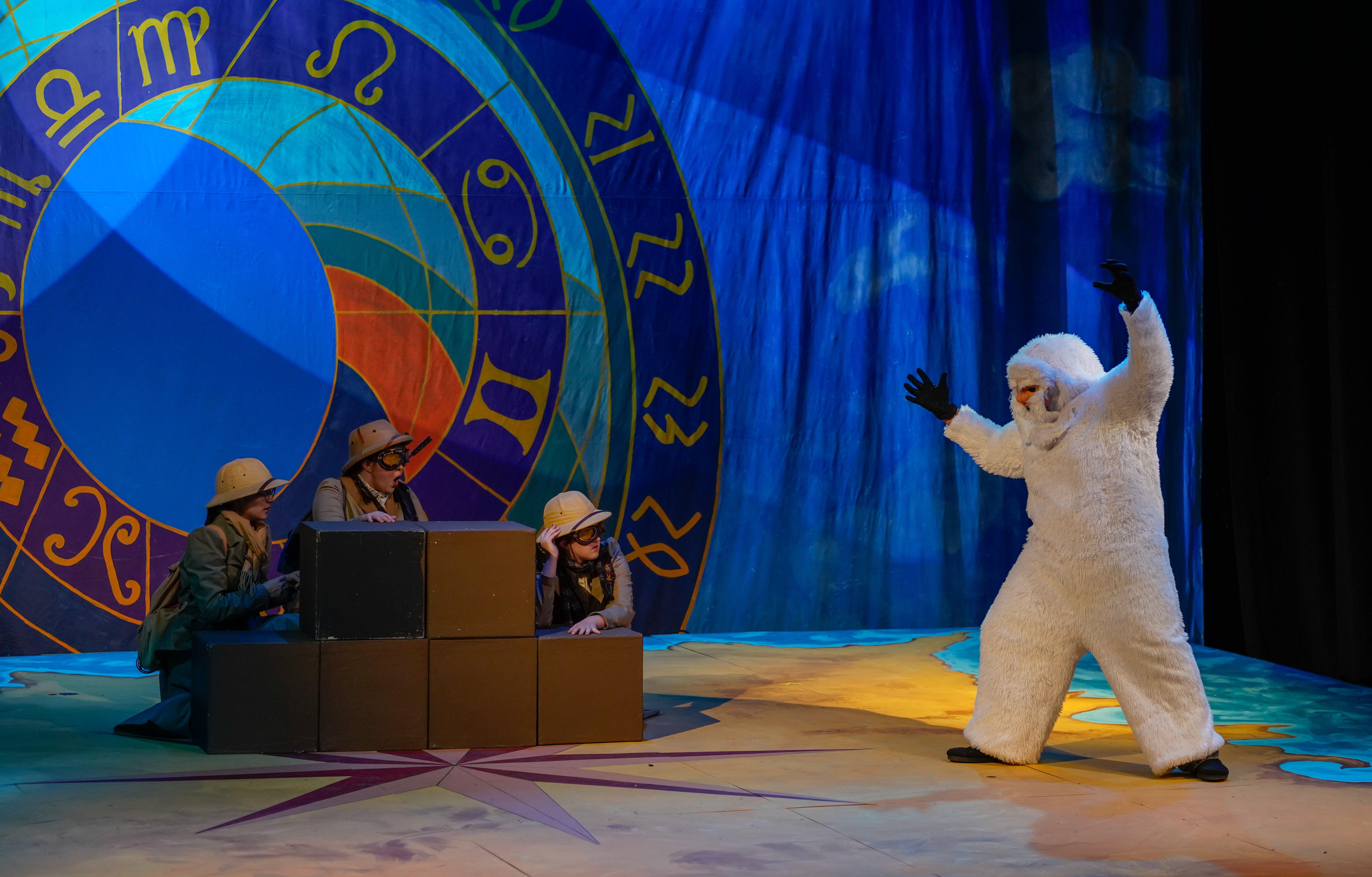
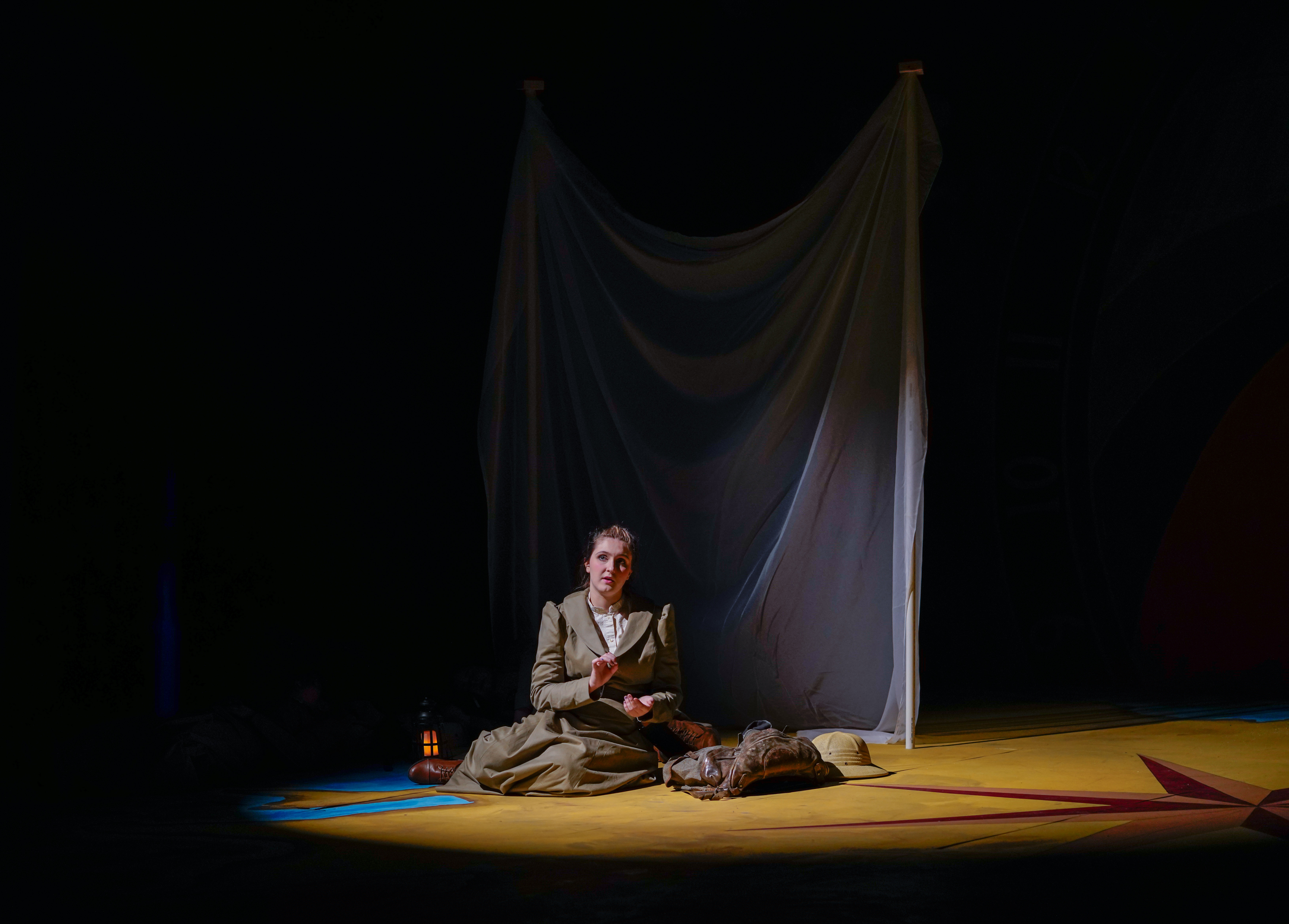
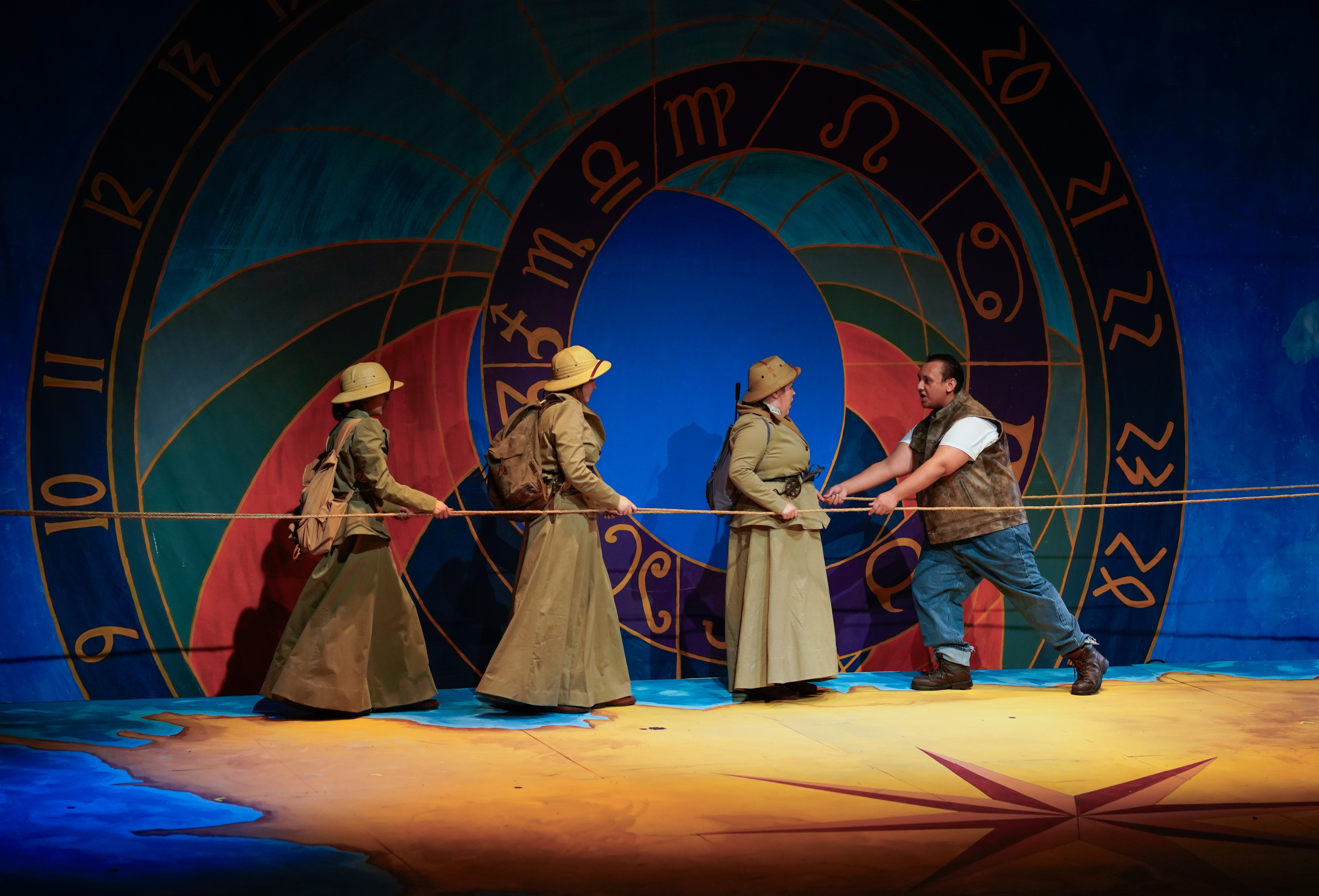
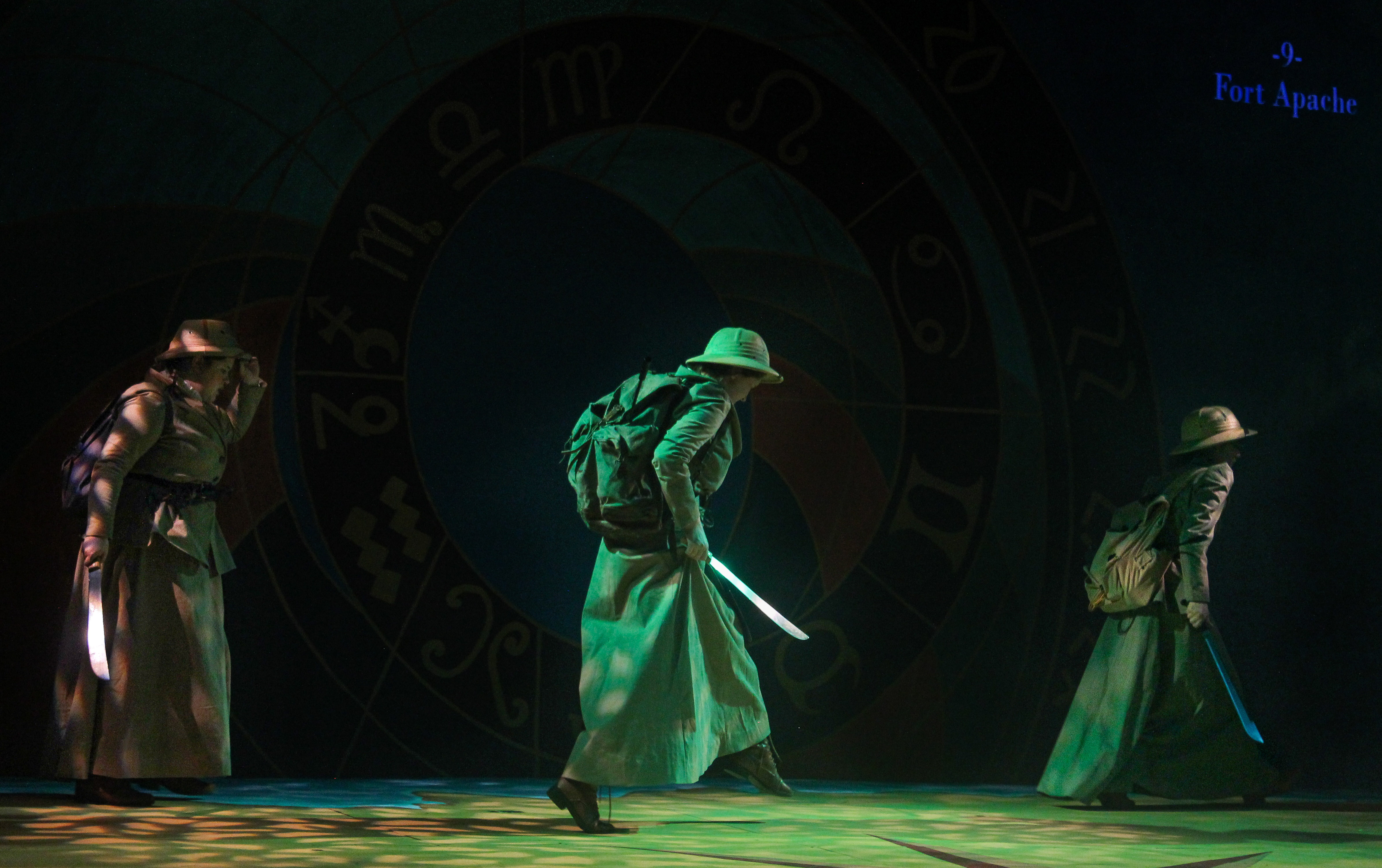
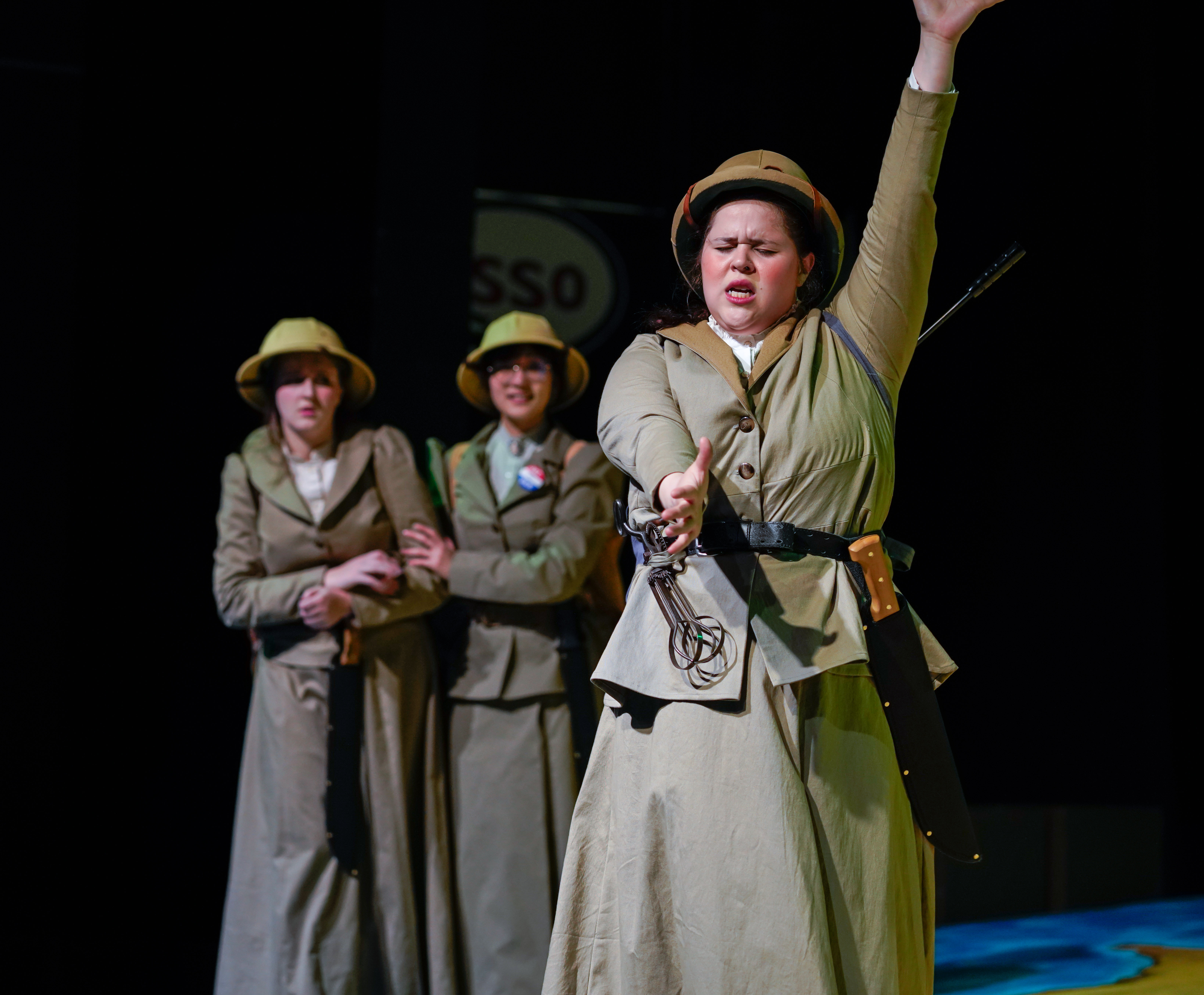
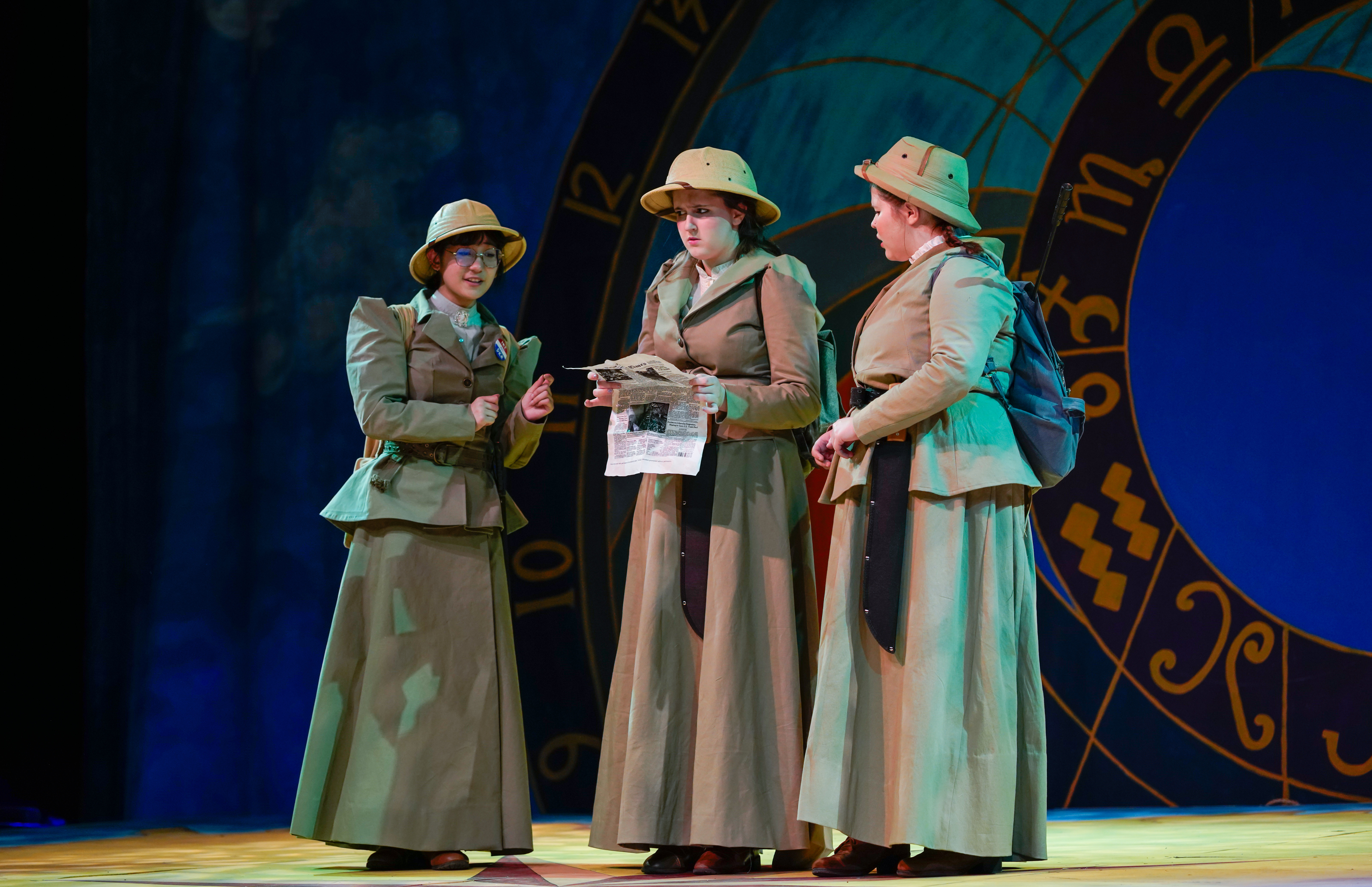
Director's Note (2025) : While "On the Verge" is about a lot of things, I believe it’s mostly about words. What they are, where they come from, how they change, and what happens when they fail. As our intrepid explorers lose (and find) themselves in time, I invite you to consider how the languages we speak routinely shape our perception. As per the much debated theory of “linguistic relativity,” new languages can fundamentally change the inner workings of one’s mind, vastly influencing how one views the world. For instance: many native English speakers refer to time linearly, with the future “ahead” and the past “behind.” But this metaphor is not universal. In Mandarin, the past is usually “below,” while the future is “above.” In a few indigenous South American languages, the past is “ahead” because it is clear, while the future looms “behind” us, unknown. This distinction can be purely written off as semantic, but “linguistic relativity” asks us to consider it a modern reflection of how a culture might identify with a concept like time. As our explorers find themselves in the future, discovering strange and unfamiliar words in their mouths, the way they think begins to change as well. Our explorers find that the language of the future offers them new expressions for their internal world. After all… some thoughts are only expressible in certain languages. It may often feel that the English language is on the verge of irrevocable decay. As Fanny says: “I have seen the future, and it is slang.” But as our explorers come to realize, slang represents a language’s growth and evolution. It doesn’t have to be destructive, but is often constructive. It’s what allows languages to gain nuance, meeting and reflecting the present moment. Perhaps, instead of turbo-charging this process, the internet has simply allowed us, for the first time in human history, to see linguistic change happening in real time. In those moments where who we are and how we speak makes us feel like a relic of a bygone era, think of our intrepid explorers who are stuck in fast forward. We can be stewards of the past while also embracing the future, as Alex says, “with all our heart.” We will change language, and language will change us. I hope, like our explorers, we can be enthralled by the delightful uncertainty of not knowing where we will end up, and who, exactly, we are becoming.